The San Diego Blog
Stay up to date with what's going on locally
The San Diego Blog
Stay up to date with what's going on locally
Blogs
Stay up to date with everything going on
San Diego Blogs
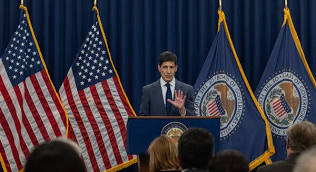
Why It Matters For Real Estate: Kevin Warsh Fed Chairman's Statements
On Wednesday, June 17, 2026, Kevin Warsh held his first press conference as the new Federal Reserve Chairman. While much of the immediate media coverage focused on the possibility of future rate hikes, my takeaway for the real estate market was more measured, and actually somewhat encouraging.
The central message was clear: Chairman Warsh is placing the fight against inflation at the center of the Fed’s policy direction.
That matters because mortgage rates do not simply move in lockstep with the Fed’s short-term interest rate decisions. They are heavily influenced by inflation expectations, the bond market, and the yield on long-term Treasuries.
As one housing economist noted after the meeting:
"Counterintuitively, the clearest path to lower mortgage rates may be a Fed that stays firm. If Warsh's commitment reduces the inflation premium embedded in long-term Treasuries, the 10-year yield and mortgage rates can move lower even without a rate cut."
In plain English: a Fed Chairman who is serious about bringing inflation under control may ultimately be constructive for the housing market, even if the process requires patience.
Warsh also acknowledged that housing is one area where current policy is already “restrictive,” which tells me the Fed is not blind to the pressure buyers, sellers, builders, and homeowners are feeling.
The bottom line: the path to a healthier real estate market runs through lower inflation. If inflation expectations come down, mortgage rates have a better chance of easing over time, even before the Fed begins cutting rates.
For buyers and sellers, this is not an overnight fix. But it is an important signal. Stability in inflation is one of the key ingredients needed to bring more confidence, affordability, and movement back into the housing market.
Here's the New York Times full article (photo credit New York Times)

Interviews
Why It Matters For Real Estate: Kevin Warsh Fed Chairman's Statements
On Wednesday, June 17, 2026, Kevin Warsh held his first press conference as the new Federal Reserve Chairman. While much of the immediate media coverage focused on the possibility of future rate hikes, my takeaway for the real estate market was more measured, and actually somewhat encouraging.
The central message was clear: Chairman Warsh is placing the fight against inflation at the center of the Fed’s policy direction.
That matters because mortgage rates do not simply move in lockstep with the Fed’s short-term interest rate decisions. They are heavily influenced by inflation expectations, the bond market, and the yield on long-term Treasuries.
As one housing economist noted after the meeting:
"Counterintuitively, the clearest path to lower mortgage rates may be a Fed that stays firm. If Warsh's commitment reduces the inflation premium embedded in long-term Treasuries, the 10-year yield and mortgage rates can move lower even without a rate cut."
In plain English: a Fed Chairman who is serious about bringing inflation under control may ultimately be constructive for the housing market, even if the process requires patience.
Warsh also acknowledged that housing is one area where current policy is already “restrictive,” which tells me the Fed is not blind to the pressure buyers, sellers, builders, and homeowners are feeling.
The bottom line: the path to a healthier real estate market runs through lower inflation. If inflation expectations come down, mortgage rates have a better chance of easing over time, even before the Fed begins cutting rates.
For buyers and sellers, this is not an overnight fix. But it is an important signal. Stability in inflation is one of the key ingredients needed to bring more confidence, affordability, and movement back into the housing market.
Here's the New York Times full article (photo credit New York Times)
Articles
Why It Matters For Real Estate: Kevin Warsh Fed Chairman's Statements
On Wednesday, June 17, 2026, Kevin Warsh held his first press conference as the new Federal Reserve Chairman. While much of the immediate media coverage focused on the possibility of future rate hikes, my takeaway for the real estate market was more measured, and actually somewhat encouraging.
The central message was clear: Chairman Warsh is placing the fight against inflation at the center of the Fed’s policy direction.
That matters because mortgage rates do not simply move in lockstep with the Fed’s short-term interest rate decisions. They are heavily influenced by inflation expectations, the bond market, and the yield on long-term Treasuries.
As one housing economist noted after the meeting:
"Counterintuitively, the clearest path to lower mortgage rates may be a Fed that stays firm. If Warsh's commitment reduces the inflation premium embedded in long-term Treasuries, the 10-year yield and mortgage rates can move lower even without a rate cut."
In plain English: a Fed Chairman who is serious about bringing inflation under control may ultimately be constructive for the housing market, even if the process requires patience.
Warsh also acknowledged that housing is one area where current policy is already “restrictive,” which tells me the Fed is not blind to the pressure buyers, sellers, builders, and homeowners are feeling.
The bottom line: the path to a healthier real estate market runs through lower inflation. If inflation expectations come down, mortgage rates have a better chance of easing over time, even before the Fed begins cutting rates.
For buyers and sellers, this is not an overnight fix. But it is an important signal. Stability in inflation is one of the key ingredients needed to bring more confidence, affordability, and movement back into the housing market.
Here's the New York Times full article (photo credit New York Times)

#58BB47
#0000FF
https://www.google.com/maps/embed?pb=!1m18!1m12!1m3!1d429155.3376406009!2d-117.43861812897623!3d32.82469764779043!2m3!1f0!2f0!3f0!3m2!1i1024!2i768!4f13.1!3m3!1m2!1s0x80d9530fad921e4b%3A0xd3a21fdfd15df79!2sSan%20Diego%2C%20CA%2C%20USA!5e0!3m2!1sen!2sph!4v1710098235283!5m2!1sen!2sph
Thank you for visiting
San Diego
Contact Info
Address
8895 Towne Centre Dr. Ste 105 PMB 436, San Diego, CA 92122-5542
Phone
+18582328722
Location
https://www.google.com/maps/embed?pb=!1m18!1m12!1m3!1d429155.3376406009!2d-117.43861812897623!3d32.82469764779043!2m3!1f0!2f0!3f0!3m2!1i1024!2i768!4f13.1!3m3!1m2!1s0x80d9530fad921e4b%3A0xd3a21fdfd15df79!2sSan%20Diego%2C%20CA%2C%20USA!5e0!3m2!1sen!2sph!4v1710098235283!5m2!1sen!2sph