Thomas J. Nelson
Your Local Guide For San Diego
Meet The Team
Your Local Guide For San Diego
Christine Frushon
Real Estate Professional Consultant at Keys with Christine Brokered by EXP Realty

Thomas J. Nelson


DRE# 01261476
Big Block-LPT Realty

Well, let me tell you, real estate runs deep in my veins. It's like the very foundation of who I am. You see, it's a family affair—my folks, my grandparents, they were all in the game, making deals, managing properties. It was like breathing for us, you know?
Now, my grandma Frances, she was the one who got me started on this journey. She'd take me along to her deals, teaching me the ropes from a young age. And then there was grandpa Al, a real property guru. He showed me the ropes of real estate investing and even got me hands-on with some light construction work. Painting, electrical, plumbing—you name it, I was there, learning the ropes.
But life's a funny old thing, isn't it? While I was knee-deep in property management, another passion came calling: music. Now, I may not be the next Elvis, but I sure can hold my own with a guitar or drums. But it was when I discovered the magic of mixing music that things really took off. Parties turned into gigs, gigs turned into paid gigs, and before I knew it, I was running my own music business at the ripe old age of nineteen.
For three decades, I was the heart and soul behind Nelson-Entertainment, a Mobile DJ & Wedding Event planning company. What began as a simple hobby blossomed into a thriving business, and I had the privilege of orchestrating over 2000 weddings and countless other events. From humble beginnings, I learned invaluable lessons about entrepreneurship and the art of service.
But life had more in store for me. Ten years into my DJ career, I joined forces with my mother in the real estate business. Watching her navigate the industry, from land acquisition to home construction, was an education in itself. She didn't just sell homes; she cultivated genuine connections with her clients, becoming more than just their REALTOR®—she was their trusted confidante.
Inspired by her example and the arrival of my son, Wyatt, I embarked on my own real estate journey. Balancing my DJ gigs and property management duties, I laid the foundation for my fledgling real estate business. In 2003, my wife Ailina and I made the leap to San Diego, drawn by its inviting climate and vibrant community. La Jolla stole our hearts, offering the perfect backdrop for our new chapter.
Joining forces with Big Block Realty was a game-changer. Surrounded by like-minded professionals, I found a home where my values and vision aligned seamlessly. With access to top-notch training and support, I'm constantly honing my skills to better serve my clients.
I don't take your trust for granted. Each transaction is an opportunity to exceed your expectations and earn your satisfaction. Whether you're buying or selling, I'm here to guide you through every step of the process. And if you know someone in need of real estate expertise, don't hesitate to send them my way—I'll ensure they receive the same level of care and attention.
In the world of real estate, results matter. With me by your side, you can rest assured that your goals are my top priority. Let's embark on this journey together and turn your real estate dreams into reality.
It's A Good Life!
Thomas
Service Areas
San Diego
Service Areas
San Diego
San Diego
EXP Relocation Certification
EXP REO Certification
AHRN Certified Military Real Estate Agent
Recent Activity

Occupied, Vacant, Staged or Empty: What Sells a Home Best?
I was recently interviewed for a Real Estate publication and this was one of the question s I was asked and how I answered it.
Interview Question:
When selling a home, what is your preferred condition: vacant and staged, owner-occupied, vacant and empty, or tenant-occupied? And why?
For a typical retail home sale, I have a pretty clear order of preference because presentation and access directly affect how quickly and successfully we can sell the property.
1. Vacant, Deep-Cleaned, Staged and Decorated
This is my first choice almost every time.
A vacant home gives us complete control over access. There is no homeowner schedule to work around, no need to coordinate around meals, kids, pets, work-from-home schedules, or last-minute appointments. Buyers can see the property when they want to see it.
And access matters. Especially in a flat or buyer-favorable market, buyers generally are not going to inconvenience themselves to see a house. If yours is difficult to show, they may simply move on to the next one.
Then add professional staging and decorating.

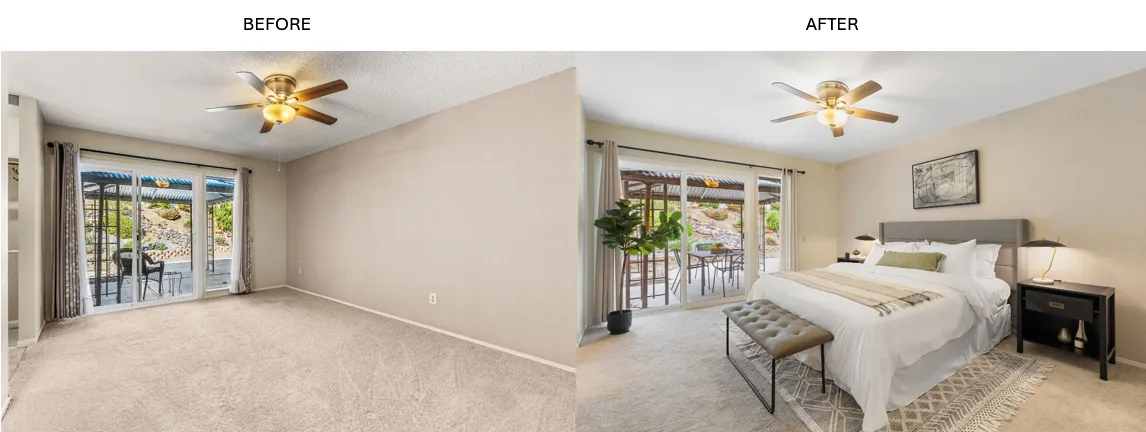
A well-staged home creates an emotional first impression. It helps define the rooms; buyers understand how rooms function, gives the home warmth and scale, and allows them to picture themselves living there.
My philosophy is simple:
A staged vacant house says, “This home is ready for you to move in now.”

2. Owner-Occupied, When the Sellers Are Flexible and the Home Shows Beautifully
Vacating your home before it sells may not always be possible. An owner-occupied home can work very well if the sellers understand what selling requires.
If they live cleanly, keep the property consistently show-ready, and are flexible enough to accommodate buyer appointments, I have no problem selling the home occupied, and 30% of the time, I have to list this way.
The challenge is that every restriction on showing times creates another opportunity for a buyer to skip the property.
That is why, given the choice, I would still take the vacant, staged property. It gives us greater control over both presentation and access.
3. Vacant and Empty
I would generally rather have a vacant property than one that is difficult to access, and if it is a normal retail sale, I would prefer not to leave it completely empty; staging matters!
When buyers walk into an empty house, there is nothing competing for their attention.
They notice the flooring.
They notice the walls.
They notice every ding, scratch, awkward corner, and maintenance issue.
Furniture and décor aren’t there to hide defects. Good staging helps buyers experience a home as a place to live, rather than simply inspecting four walls, a floor, and every little imperfection.

I look at it this way: my wife saw me in some nice outfits, got to know me, and had plenty of time to fall in love with me before she was introduced to the full, unedited birthday-suit version. 😉
An empty home can be the real estate equivalent of showing up naked on the first date. It reveals every flaw before the buyer has had a chance to connect with the property, imagine themselves living there, and fall in love with what makes it special.
Staging doesn’t disguise the home. It simply gives the home a proper first impression before asking the buyer to appreciate it completely undressed.
A vacant, empty house can unintentionally communicate:
“There is work to be done here.”
A beautifully staged house communicates:
“I could move into this and work with this, despite it's deferred maintenance items.”
That emotional distinction matters.
4. Tenant-Occupied (single-door residential)
This is usually my least-preferred situation. Whenever practical, I would rather wait for the tenant to vacate before bringing the property to market.
But I want to make an important distinction: I’m not talking about multi-unit investment properties where the tenancy may actually be part of the value of the property. I’m talking about a single-family home, condominium, or townhouse that can just as easily be sold to an owner-occupant as to an investor.
And, of course, timing matters. This strategy is generally practical when the tenant is month-to-month or has roughly 60 days or less remaining on the lease. If there is significantly more time left on a fixed-term lease, then we’re usually talking about advance planning rather than simply waiting a few weeks to go to market.
For these traditional residential properties, if I have the choice between selling tenant-occupied and waiting a reasonable amount of time to sell vacant, I will usually choose vacant. It gives us far greater control over access, presentation, preparation/repairs, and ultimately the buyer’s first impression.
The biggest issue is access. Tenant-occupied properties often require additional notice, coordination, and scheduling restrictions. If buyers cannot conveniently see the property, particularly when they have plenty of other choices, many simply move on.
There is also an important practical reality: the tenant's interests and the seller's interests are not necessarily aligned. The tenant typically has no financial stake in helping us maximize the sale price. They may not maintain the home at the level we would choose for showings, and understandably, they may not be enthusiastic about helping us sell the property that will ultimately require them to move.
That doesn't make the tenant wrong. It simply makes the property harder to market at its absolute best.
The Exception: Rehab or Fixer Properties
There is one situation where I usually do not hire staging at all: a true rehabilitation "rehab" property.
If we are selling a fixer primarily to contractors, investors, or fix-and-flippers, I'm not trying to create an emotional HGTV moment. I want them to see everything. Those buyers are doing a very different calculation:
What is the property's after-repair value?
What will the renovation cost?
What can I pay today and still make the project work?
They don't care very much about the sofa or the throw pillows. They care about the numbers.
In that situation, an empty house can actually be an advantage because buyers can clearly evaluate the condition and scope of work.
The Recap
So, for a traditional home sale, my preference is:
1. Vacant, deep-cleaned, staged and decorated
Best combination of access, presentation, and buyer emotion.
2. Owner-occupied, clean and highly flexible
Absolutely workable when the sellers make showing the home easy.
3. Vacant and empty
Excellent access, but weaker presentation for a normal retail buyer.
4. Tenant-occupied
Usually the most challenging because both access and presentation are harder to control.
The exception is a true rehab property. In that case, I want it vacant and honest. Let investors see exactly what they're buying.
At the end of the day, the principle behind all of this is pretty straightforward:
Make the home easy to see and easy to fall in love with.
Access gets buyers through the door. Presentation helps them emotionally connect once they're inside. And the easier we make both of those things, the better our opportunity to sell efficiently without unnecessarily compromising price.

Occupied, Vacant, Staged or Empty: What Sells a Home Best?
I was recently interviewed for a Real Estate publication and this was one of the question s I was asked and how I answered it.
Interview Question:
When selling a home, what is your preferred condition: vacant and staged, owner-occupied, vacant and empty, or tenant-occupied? And why?
For a typical retail home sale, I have a pretty clear order of preference because presentation and access directly affect how quickly and successfully we can sell the property.
1. Vacant, Deep-Cleaned, Staged and Decorated
This is my first choice almost every time.
A vacant home gives us complete control over access. There is no homeowner schedule to work around, no need to coordinate around meals, kids, pets, work-from-home schedules, or last-minute appointments. Buyers can see the property when they want to see it.
And access matters. Especially in a flat or buyer-favorable market, buyers generally are not going to inconvenience themselves to see a house. If yours is difficult to show, they may simply move on to the next one.
Then add professional staging and decorating.
A well-staged home creates an emotional first impression. It helps define the rooms; buyers understand how rooms function, gives the home warmth and scale, and allows them to picture themselves living there.
My philosophy is simple:
A staged vacant house says, “This home is ready for you to move in now.”
2. Owner-Occupied, When the Sellers Are Flexible and the Home Shows Beautifully
Vacating your home before it sells may not always be possible. An owner-occupied home can work very well if the sellers understand what selling requires.
If they live cleanly, keep the property consistently show-ready, and are flexible enough to accommodate buyer appointments, I have no problem selling the home occupied, and 30% of the time, I have to list this way.
The challenge is that every restriction on showing times creates another opportunity for a buyer to skip the property.
That is why, given the choice, I would still take the vacant, staged property. It gives us greater control over both presentation and access.
3. Vacant and Empty
I would generally rather have a vacant property than one that is difficult to access, and if it is a normal retail sale, I would prefer not to leave it completely empty; staging matters!
When buyers walk into an empty house, there is nothing competing for their attention.
They notice the flooring.
They notice the walls.
They notice every ding, scratch, awkward corner, and maintenance issue.
Furniture and décor aren’t there to hide defects. Good staging helps buyers experience a home as a place to live, rather than simply inspecting four walls, a floor, and every little imperfection.
I look at it this way: my wife saw me in some nice outfits, got to know me, and had plenty of time to fall in love with me before she was introduced to the full, unedited birthday-suit version. 😉
An empty home can be the real estate equivalent of showing up naked on the first date. It reveals every flaw before the buyer has had a chance to connect with the property, imagine themselves living there, and fall in love with what makes it special.
Staging doesn’t disguise the home. It simply gives the home a proper first impression before asking the buyer to appreciate it completely undressed.
A vacant, empty house can unintentionally communicate:
“There is work to be done here.”
A beautifully staged house communicates:
“I could move into this and work with this, despite it's deferred maintenance items.”
That emotional distinction matters.
4. Tenant-Occupied (single-door residential)
This is usually my least-preferred situation. Whenever practical, I would rather wait for the tenant to vacate before bringing the property to market.
But I want to make an important distinction: I’m not talking about multi-unit investment properties where the tenancy may actually be part of the value of the property. I’m talking about a single-family home, condominium, or townhouse that can just as easily be sold to an owner-occupant as to an investor.
And, of course, timing matters. This strategy is generally practical when the tenant is month-to-month or has roughly 60 days or less remaining on the lease. If there is significantly more time left on a fixed-term lease, then we’re usually talking about advance planning rather than simply waiting a few weeks to go to market.
For these traditional residential properties, if I have the choice between selling tenant-occupied and waiting a reasonable amount of time to sell vacant, I will usually choose vacant. It gives us far greater control over access, presentation, preparation/repairs, and ultimately the buyer’s first impression.
The biggest issue is access. Tenant-occupied properties often require additional notice, coordination, and scheduling restrictions. If buyers cannot conveniently see the property, particularly when they have plenty of other choices, many simply move on.
There is also an important practical reality: the tenant's interests and the seller's interests are not necessarily aligned. The tenant typically has no financial stake in helping us maximize the sale price. They may not maintain the home at the level we would choose for showings, and understandably, they may not be enthusiastic about helping us sell the property that will ultimately require them to move.
That doesn't make the tenant wrong. It simply makes the property harder to market at its absolute best.
The Exception: Rehab or Fixer Properties
There is one situation where I usually do not hire staging at all: a true rehabilitation "rehab" property.
If we are selling a fixer primarily to contractors, investors, or fix-and-flippers, I'm not trying to create an emotional HGTV moment. I want them to see everything. Those buyers are doing a very different calculation:
What is the property's after-repair value?
What will the renovation cost?
What can I pay today and still make the project work?
They don't care very much about the sofa or the throw pillows. They care about the numbers.
In that situation, an empty house can actually be an advantage because buyers can clearly evaluate the condition and scope of work.
The Recap
So, for a traditional home sale, my preference is:
1. Vacant, deep-cleaned, staged and decorated
Best combination of access, presentation, and buyer emotion.
2. Owner-occupied, clean and highly flexible
Absolutely workable when the sellers make showing the home easy.
3. Vacant and empty
Excellent access, but weaker presentation for a normal retail buyer.
4. Tenant-occupied
Usually the most challenging because both access and presentation are harder to control.
The exception is a true rehab property. In that case, I want it vacant and honest. Let investors see exactly what they're buying.
At the end of the day, the principle behind all of this is pretty straightforward:
Make the home easy to see and easy to fall in love with.
Access gets buyers through the door. Presentation helps them emotionally connect once they're inside. And the easier we make both of those things, the better our opportunity to sell efficiently without unnecessarily compromising price.

Testimonials
Wow! negotiated a $400K price reduction on a listing that had already been reduced by $300K!! If you want a skilled negotiator on your side, she’s your girl.
- Carl
is an amazing person and fantastic Real Estate professional. Her marketing skills are second to none, if you are in need of selling or buying a home, she is your choice!
– Duane
and her team are amazing to work with! They go above and beyond with help and communication, and so much fun as well.
– Kristen
was amazing to work with! She made the whole process look so easy. Thank you for all of your hard work.
- Celene
It was my pleasure working with . She is very professional and knowledgeable in the real estate field.
– Natalia
is a phenomenal agent. She made the home buying process simple and I highly recommend her!
– Shronda
https://storage.googleapis.com/msgsndr/LGvMHSpjamZ678AUgrJY/media/65ed25120013ad8189925cc4.jpeg
#58BB47
#0000FF
https://www.google.com/maps/embed?pb=!1m18!1m12!1m3!1d429155.3376406009!2d-117.43861812897623!3d32.82469764779043!2m3!1f0!2f0!3f0!3m2!1i1024!2i768!4f13.1!3m3!1m2!1s0x80d9530fad921e4b%3A0xd3a21fdfd15df79!2sSan%20Diego%2C%20CA%2C%20USA!5e0!3m2!1sen!2sph!4v1710098235283!5m2!1sen!2sph
Thank you for visiting
San Diego
Contact Info
Address
8895 Towne Centre Dr. Ste 105 PMB 436, San Diego, CA 92122-5542
Phone
+18582328722
Location
https://www.google.com/maps/embed?pb=!1m18!1m12!1m3!1d429155.3376406009!2d-117.43861812897623!3d32.82469764779043!2m3!1f0!2f0!3f0!3m2!1i1024!2i768!4f13.1!3m3!1m2!1s0x80d9530fad921e4b%3A0xd3a21fdfd15df79!2sSan%20Diego%2C%20CA%2C%20USA!5e0!3m2!1sen!2sph!4v1710098235283!5m2!1sen!2sph

Facebook
Instagram
LinkedIn
Youtube
Website